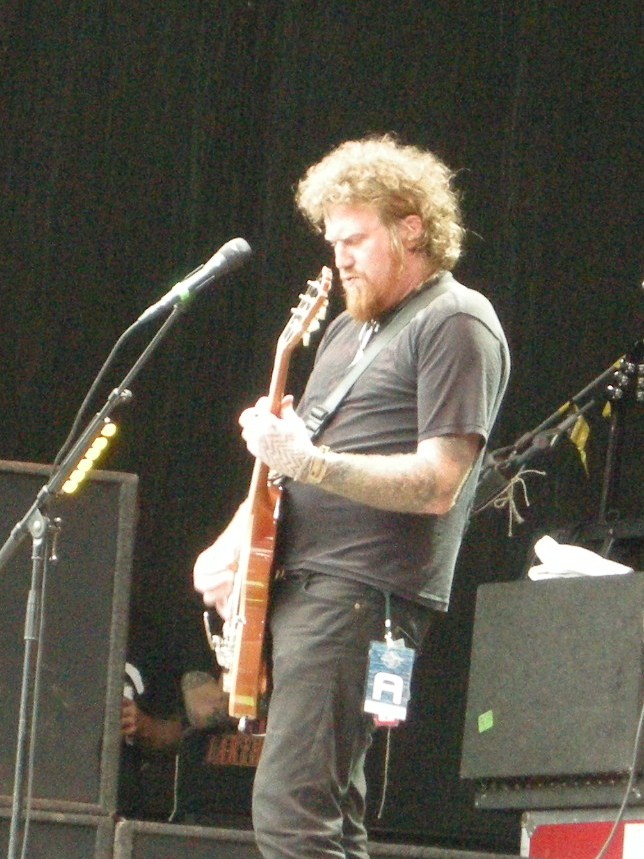
Mastodon frames the lawsuit as a misunderstanding of business agreements, insisting they honor Hinds' legacy but refuse to rewrite contracts or accept false accusations of wrongdoing.
Insiders whisper that the real tension stems from the abrupt nature of Hinds' exit. His final Instagram comment, 'They kicked me out,' still echoes loudly, suggesting the band’s legal defense is trying to sanitize a messy breakup.
1. On Nov. 2, 2026, Mastodon filed a motion to dismiss claims of breach of fiduciary duty and conversion (theft). 2. The estate disputes an $80,000 check as insufficient payment for Hinds' 25% stake. 3. Hinds died in an August 2025 motorcycle crash at age 51.
Mastodon is playing hardball, arguing that while they respect Hinds' music, they won't let his estate rewrite the legal narrative of his departure.
The heavy metal band Mastodon is dragging the estate of its late guitarist, Brent Hinds, into a brutal courtroom brawl. On Monday, November 2, 2026, surviving members Brann Dailor, Bill Kelliher, and Troy Sanders filed their first legal response to the lawsuit brought by Hinds’ father. The band isn't just defending themselves; they are actively trying to dismantle the core of the complaint, labeling the claims as "foundational errors" that fail as a matter of law.
This move signals that the band is prepared to fight tooth and nail over the financial and legal remnants of their 25-year partnership. At the heart of the dispute is money and meaning. Hinds died in a motorcycle crash in August 2025 at age 51, just months after Mastodon announced the end of his tenure.
His estate is suing to cash out his 25% stake in the band’s operations, arguing that an $80,000 check they received post-mortem was insultingly low. However, Mastodon’s court filing, obtained by Billboard, pushes back hard. They acknowledge the payment issue needs resolution but insist it should be treated as a simple contract dispute, not a case of alleged theft or breach of fiduciary duty.
They want the judge to trim away these heavier allegations, arguing that Georgia law does not recognize the obligations the estate is trying to impose. The band’s lawyers took a sharp tone in their filing, balancing respect with legal rigor. "His contributions to the band’s legacy are undeniable, and his death was a profound loss.
None of that is in dispute," the filing reads. But they quickly pivoted to the legal defense: "But honoring Hinds’s legacy does not require rewriting the agreements governing his business interests or imposing obligations on his former bandmates that Georgia law does not recognize." This distinction is crucial. Mastodon is drawing a hard line between emotional respect and contractual obligation, refusing to let grief dictate their business terms.
Beyond the money, the lawsuit has spilled over into the band’s recent creative output. The estate alleges that the artwork for Mastodon’s August 2026 album, *Marrow Deep*—which debuted at No. 2 on Billboard’s Top Hard Rock Albums chart—featured Hinds’ likeness without permission. Mastodon dismisses this as a "technically flawed legal claim," arguing it’s a misuse of legal terminology rather than a valid grievance.
With reps for both sides declining to comment on November 3, the stage is set for a grueling legal battle. As the band’s lawyers put it, the "truth" will be addressed in due course, but only after they’ve cleared away what they see as baseless accusations. For fans, this isn't just a business dispute; it's the final, ugly chapter of a legendary band’s story, played out in an Atlanta courtroom.


